Profile surface coating
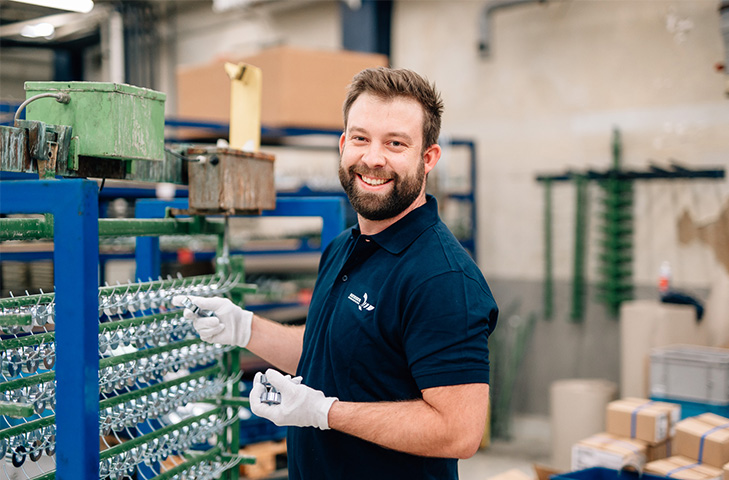
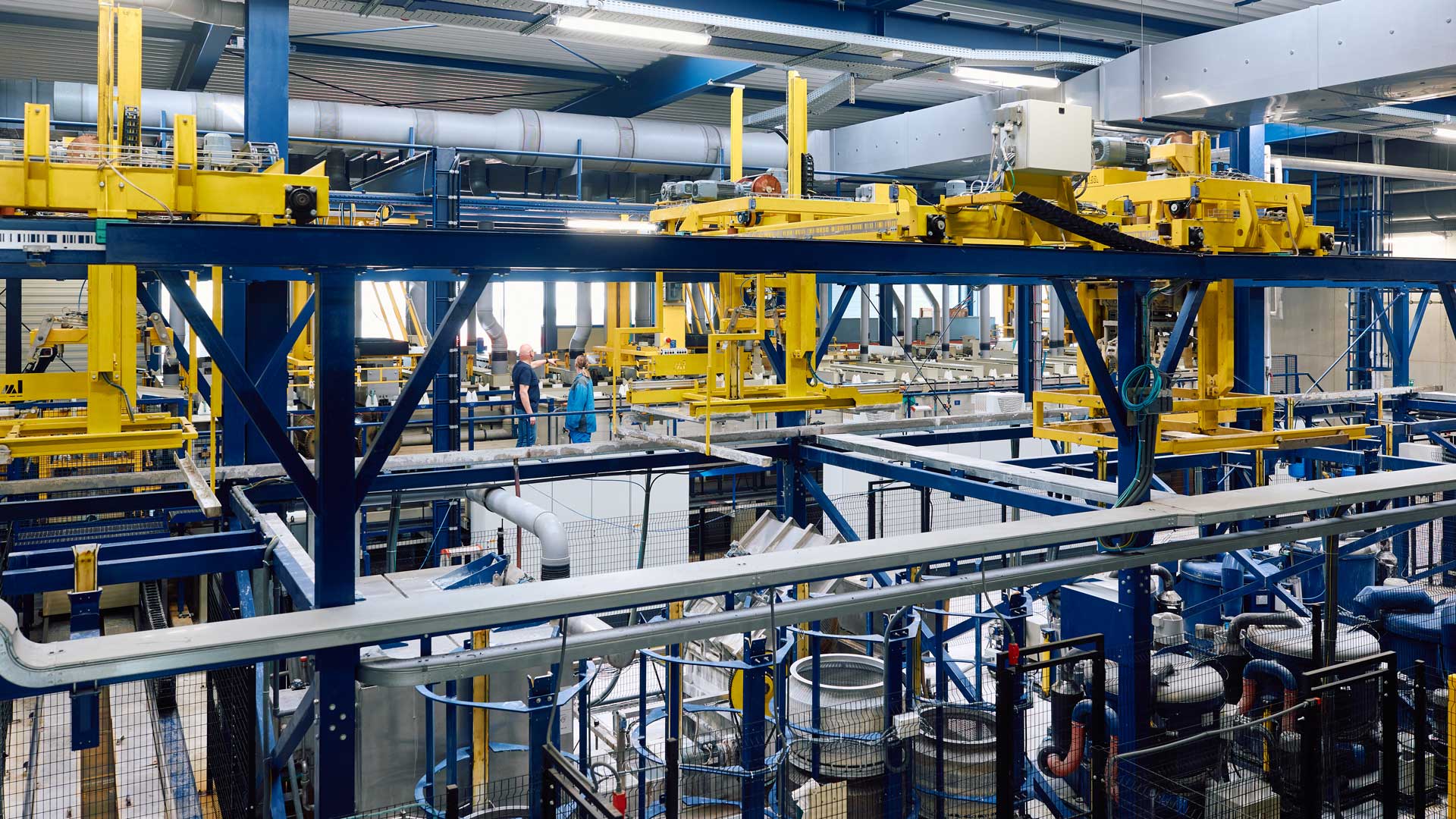
Finishing is one of the crucial quality aspects in screw production. REISSER provides you with quick, flexible and comprehensive service and support for all your coating requirements and logistics issues.
Our options for surface coatings are ideal for both individual special requirements and large quantities. We can offer you comprehensive coating solutions based on state-of-the-art equipment and our many years of expertise, which we have been cultivating since 1927. Our product range extends not only to the fastenings industry, but also to components from a wide variety of sectors such as the automotive industry, valve technology and mechanical engineering.
Electropolishing (G/T)
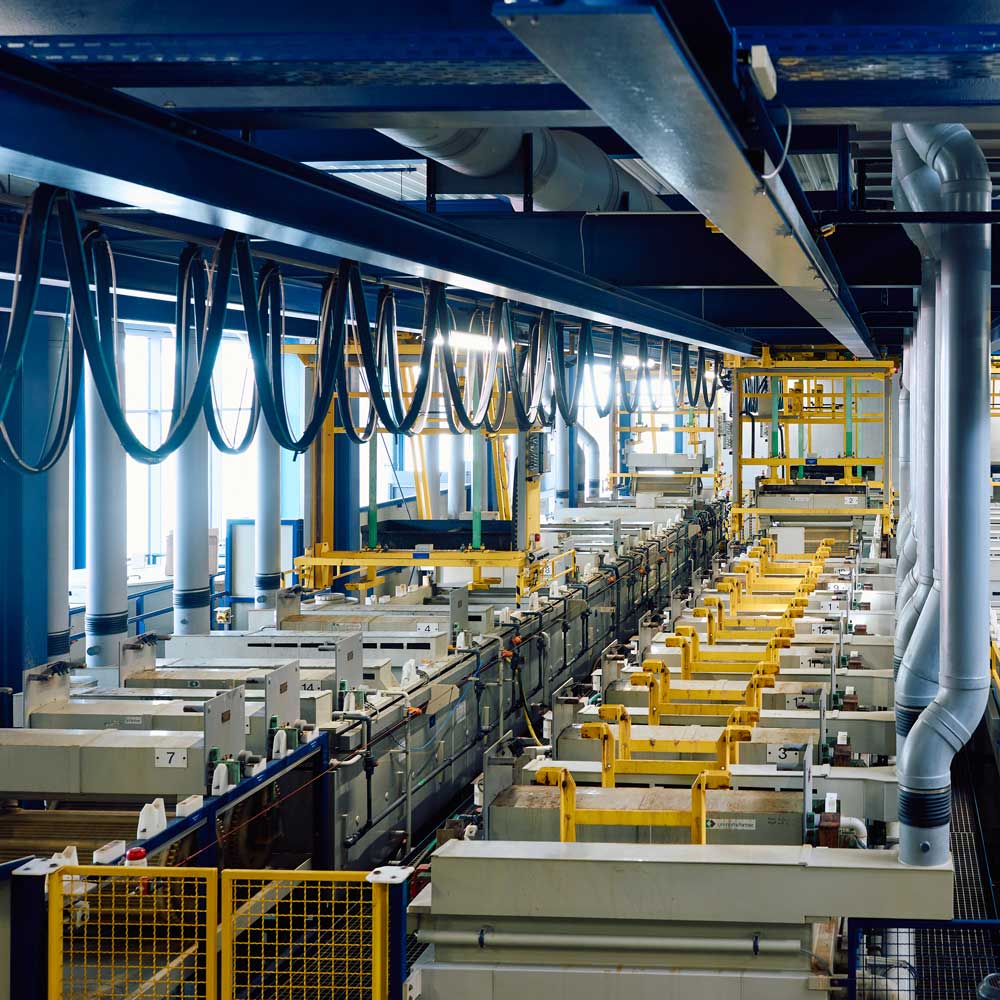
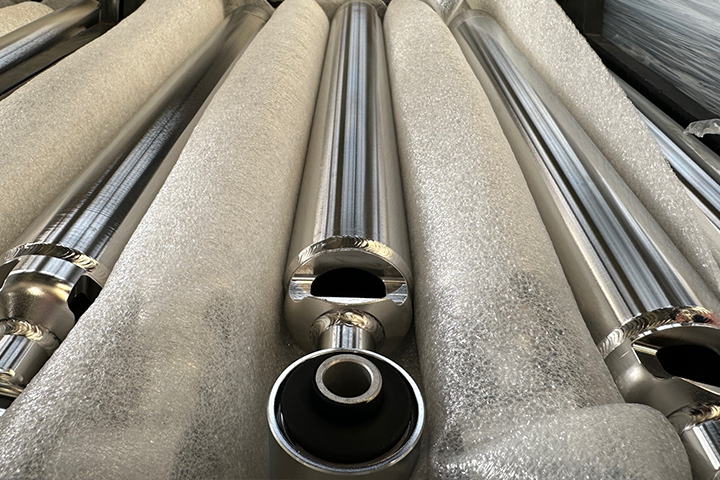
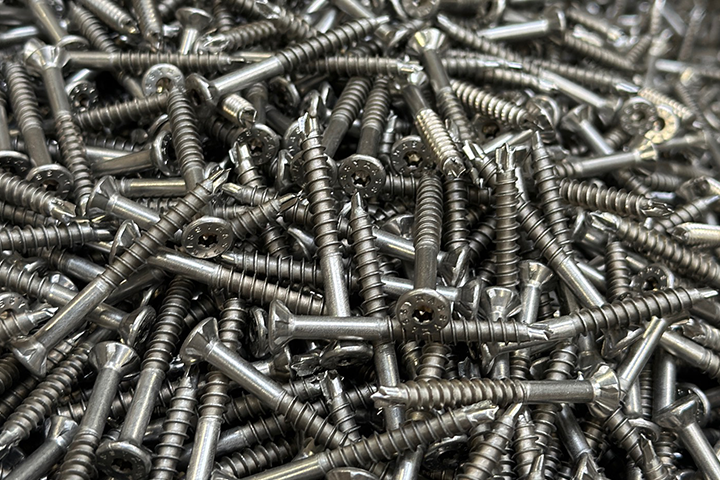
Electropolishing is a process that improves both the technical and decorative properties of stainless steel by ablating the surface and at the same time produces a burr-free surface. The main purpose is to reduce roughness and polish machined surfaces to a mirror finish, all in a single operation.
Pickling and passivation (G/T)
Pickling removes a thin metallic layer from the steel's surface. With stainless steels, a mixture of different acids is usually used for pickling.
Pickling has several purposes. This removes annealing colours from welded constructions where the chromium content of the steel surface is reduced. It can also remove light scaling that occurs after heat treatment. The surface of stainless steels normally passivates itself. In certain cases however, it may be necessary to support this process by treating with an oxidising acid.
No material layer is removed during passivation. Instead, it aims to specifically optimise the properties and thickness of the passive layer.
Pickling and passivation do not take place simultaneously, but are performed one after the other in separate acid treatments. The nitric acid used in the standard process has only a slight pickling effect on stainless steels and is mainly used for passivation.
Varnishing
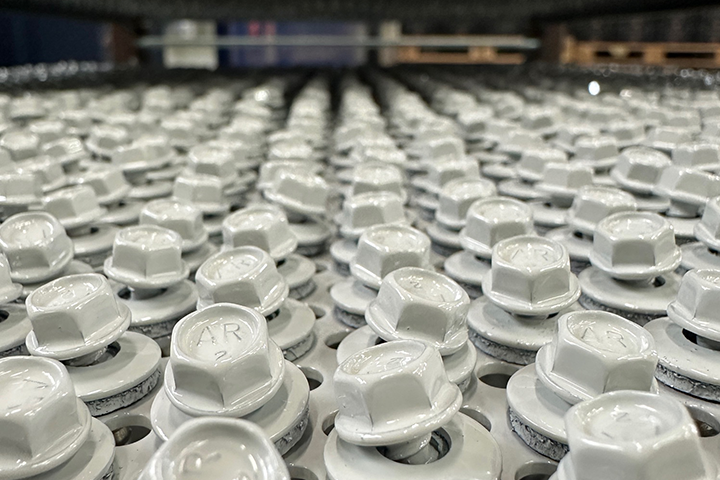
We offer a wide range of colour options for screws, rivets and other connection elements. With our wet paint system, we can offer 25,000 colours (e.g. RAL, NCS, etc.) in more than 20 quality grades (glossy, matt). Orientating ourselves on individual samples enables us to select the right paint system for you. We cover all your needs, whether you need just a single unit or series production.
Electroless nickel plating (G/T)
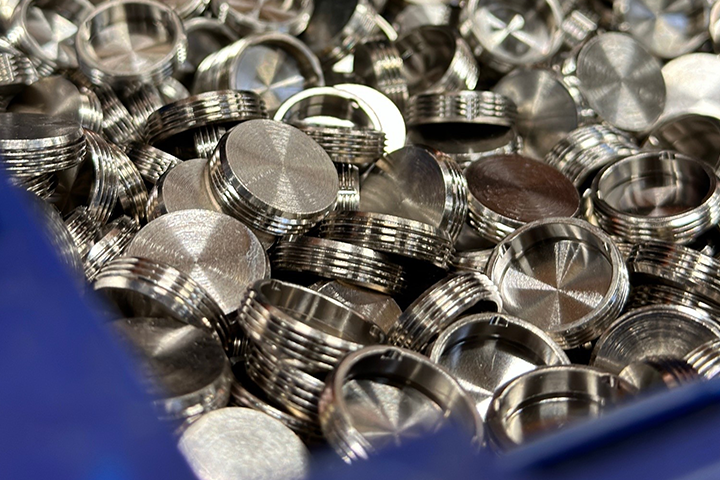
The purpose of electroless nickel plating is to provide wear protection. Following suitable heat treatment and from a layer thickness of more than 3 µm the surface can reach a degree of hardness that brings out the positive properties of the electroless nickel layer. We offer electroless nickel plating in both the rack process and for special requirements by request, for both small parts and bulk goods.
- High wear resistance
- Outstanding mechanical and technological properties
- Extreme homogeneity
- Layer with precise contours
- Pore-free, first-class dimensional accuracy (also at the tips and in the cavities), layer thicknesses of ± 2 µm can be maintained
- Non-magnetic, chemically very resistant and easy to solder
- Food-safe and both lead-free and cadmium-free
Zinc plating G/T
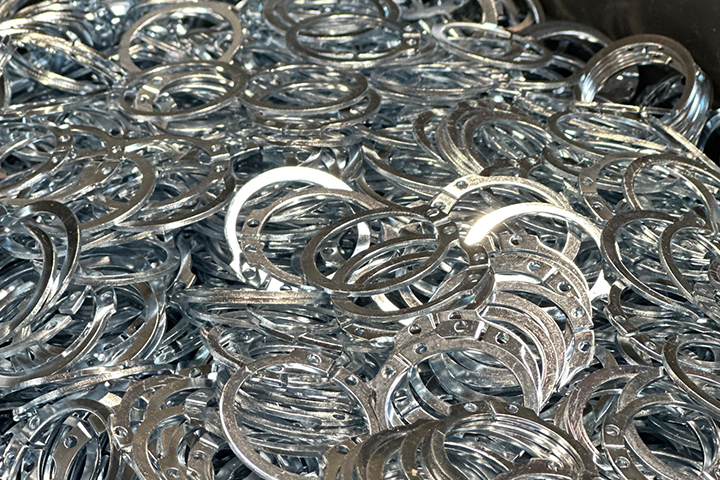
Zinc plating gives iron and steel long-term protection from rust and corrosion. The corrosion resistance can be significantly improved by passivation. Depending on the corrosion resistance requirements, there are various processes to choose from, including Cr(VI)-free methods such as blue passivation or thick-film passivation with and without nanoparticles. Thanks to our special pre-treatment technology, we can even zinc plate stainless steels, this process being characterised by its high cost-effectiveness.
Finishing as barrel goods: Small parts and bulk goods
Finishing as rack goods: Large and sensitive parts
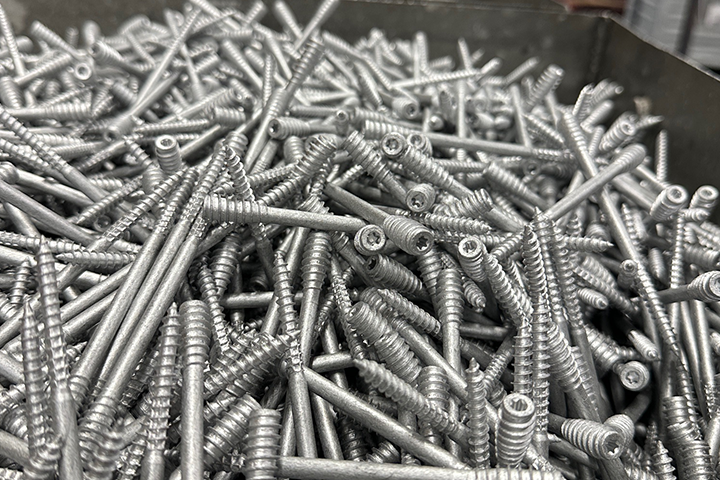
®
The RUSPERT® coating provides reliable corrosion protection. RUSPERT®-coated parts are ideally suited to maritime, industrial or tropical climates.
The most important component for corrosion protection is the RUSPERT® flake. This paint-like additive is applied by dipping and then baking at 200°C. The RUSPERT® coating is mainly used for bulk parts made of materials such as steel, brass, copper, die-cast zinc, aluminium and stainless steels (screws, nuts, washers, springs, turned parts, punched and bent parts). The respective layer combination differs depending on the material, but as the final coating the RUSPERT® coating is always the same.
- Unique resistance to corrosive gases
- Very good adhesion of the coating to the base material
- No contact corrosion
- Excellent resistance to influences of the weather such as moisture, water/salt water, fuel, engine oil and brake fluid as well as antifreeze and cleaning agents
- Temperature resistance up to 250°C
- Standard colours: Silver/black, on request: e.g. olive green/brown
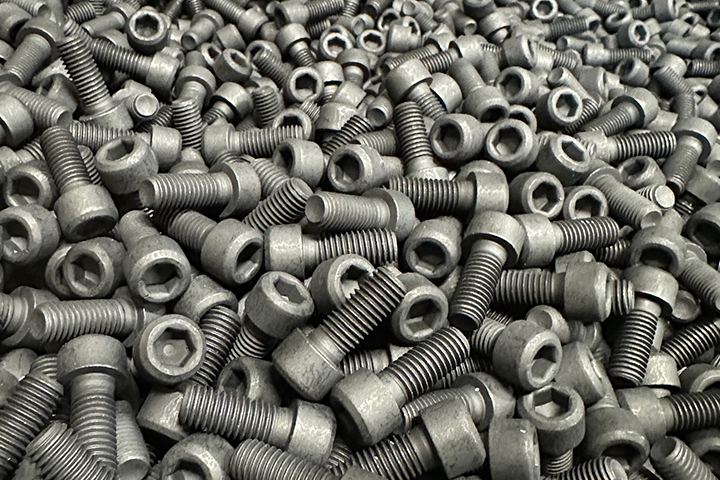
Zinc flake
Zinc flake corrosion protection systems consist of two components: the base coat and an optional top coat. They offer high-performance corrosion protection for connection elements, structural parts and chassis parts. The base coat forms a layer with a high proportion of zinc and aluminium flakes, providing excellent protection against corrosion. The top coat can consist of various materials, including organic layers, inorganic sealants and/or lubricants. This additional coating helps to further improve corrosion protection and can be customised depending on the requirements and application area.
Zinc flake corrosion protection systems are available in the colours silver and black. Additional colours can also be produced on request to meet individual requirements.